October 13, 2026
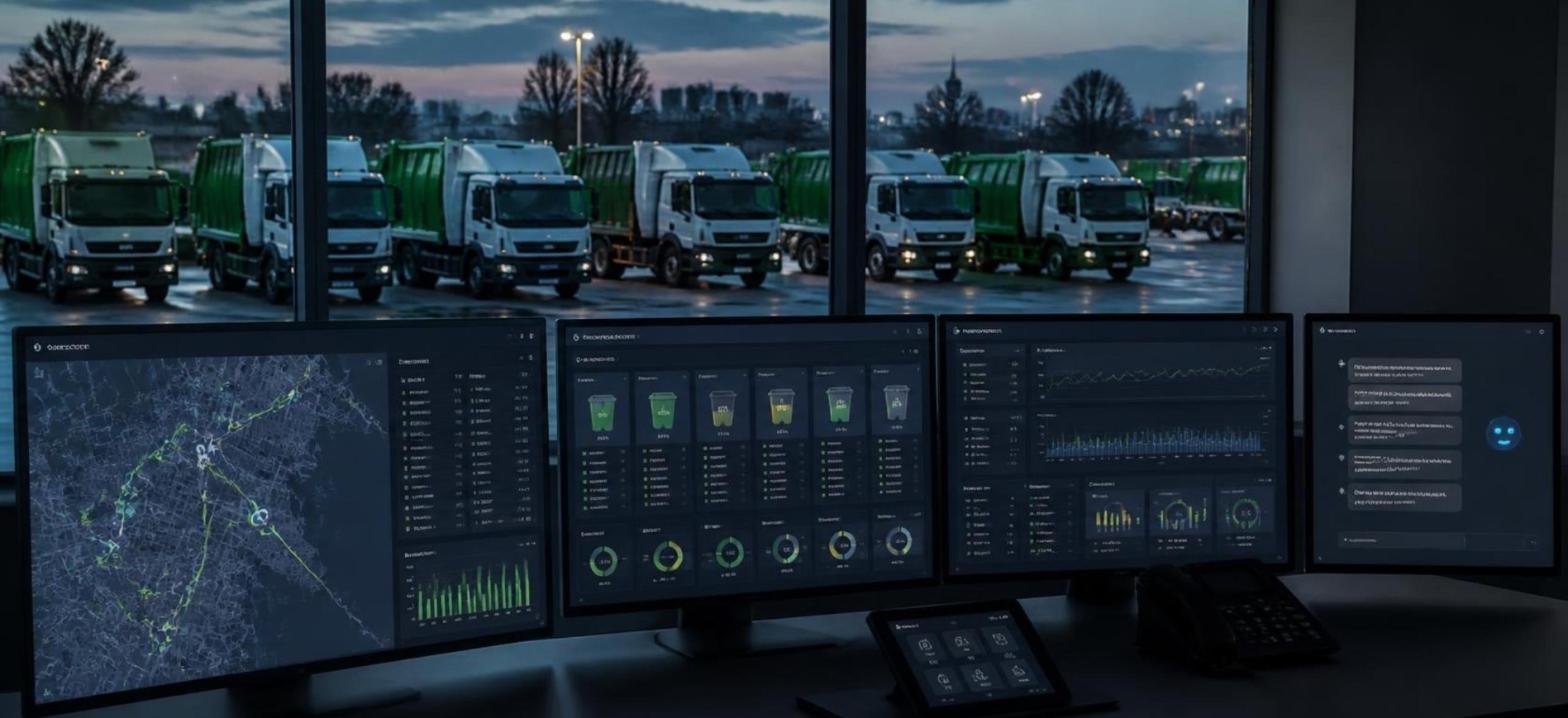
Rocky is the AI agent that Eco Combustion Europe is integrating into its control platform...


Norway presents itself as the great success of electric mobility. But behind its figures lies a fiscal architecture difficult to replicate in Spain. We analyze the hidden costs of mass electrification and an alternative that reduces consumption and emissions from day one: optimizing the existing thermal power plant fleet.
In 2024, battery electric vehicles accounted for 88.9% of new car sales in Norway, compared to 82.4% in 2023 (Reuters). In 2025 it reached 95.9% (Hydrocarbon Processing).
At first glance, it seems the definitive proof that the electric car is a mature technology that has been fully accepted by the market. A more detailed analysis reveals a more complex reality.
For years, Norway combined VAT exemptions, toll discounts and ferries, access to priority lanes and increasingly harsh taxation on combustion vehicles. Although it no longer offers direct subsidies for purchasing in 2025, it maintains a wide range of tax benefits for zero-emission vehicles (European Observatory on Alternative Fuels).
That is, the market has been fiscally oriented towards a specific technology: the electric option has become increasingly attractive and the thermal option increasingly expensive. This is a model that is difficult to transfer to countries with a different fiscal structure, a different fleet of vehicles and different public spending capacity.
The incentives work as long as the electric vehicle is a minority vehicle. When it becomes a majority vehicle, they stop being sustainable.
European states fund a significant part of their budget through car taxation. In Spain, the Tax on Hydrocarbons has raised revenue. 12.366 billion euros in 2025, Within Special Taxes totaling 23,083 million, 4.3% more than in 2024 (Tax Agency).
If fuel consumption falls massively, that revenue will have to come from somewhere else. The predictable outcome is that the electric vehicle will also be taxed in one of these ways:
The user can switch from paying taxes for fuel consumption to paying them for driving, refueling, or parking. Norway has already begun to withdraw some of its initial benefits: the very success of electrification erodes the tax base that funded it.
Electric mobility can reduce local emissions and improve air quality in cities if implemented in an orderly manner. On the other hand, imposing it in a hasty manner conflicts with the Spanish economic reality:
The automotive sector accounts for about 7% of the European Union's GDP and supports nearly 14 million jobs, according to a study by the European Parliament cited by the newspaper. European Observatory on Alternative Fuels.
Europe has been very strong in engines, injection, transmission, post-combustion gas treatment, and combustion engineering. Electrification reduces the weight of these capabilities and increases that of other areas where Europe does not lead: batteries, cells, power electronics, software, and critical raw materials.
China will manufacture more than 80% of the batteries produced worldwide by 2025, according to the International Energy Agency. To reduce that dependence, Europe has already committed nearly 200 billion euros to the electric vehicle ecosystem (ReutersChina also supplies around 95% of the rare earths that the EU uses (Reuters), and the Union approved in 2024 the Law on Critical Raw Materials precisely because of that supply risk.
The contradiction is obvious: Europe wants to reduce its dependence on oil and gas, but risks replacing it with an industrial and mining dependency on third countries. A solid transition should not replace one dependency with another.
The electric car has clear advantages in local emissions, especially in the city. But it is not exempt from environmental and technical costs:
There is an idea that often gets left out of the debate: reducing emissions does not require replacing every combustion vehicle with an electric one. There is embedded technology capable of improving the energy and environmental performance of diesel, gasoline, and gas engines that are already in circulation.
This is the approach of Eco Combustion Europe. Our solutions act on the combustion process (Fuel Catalyst), the operational monitoring of the vehicle (Fleet Intelligence) and the energy efficiency of the fleet. They apply to trucks, buses, municipal fleets, machinery, generators, locomotives, boats and industrial vehicles.
With the appropriate combination of combustion catalysts, monitoring, driving management, and complementary technologies, it is possible to:
An optimized thermal vehicle should not be analyzed using the same criteria as a conventional one without any technological intervention.
| Replace with electric vehicle | Optimizing the existing park | |
|---|---|---|
| Initial investment | High: new vehicles, chargers, electric power | Lower: action is taken on vehicles that are already in use |
| Deadline to reduce emissions | At the pace of fleet renewal | From the first deposit |
| Current assets | They are withdrawn before they are amortized | They take advantage |
| Electric red | More demand and network reinforcements | No additional charge |
| External department | Batteries and critical raw materials | None new |
| Verification of the result | It depends on the electric mix and the use. | Measurable with the consumption data from the fleet itself |
Optimizing the existing park also offers strategic advantages for companies and administrations:
It is not a theory. In a recent essay in Mexico, a diesel truck traveled 6,193 km with Fuel Catalyst and improved its performance to 13.5%. Consult the trial data or check out more cases on our page Results.
Electric mobility has its place, especially in urban environments, predictable routes, captive fleets, and countries with abundant, cheap, and low-carbon electricity. But it should not be presented as a single, universal, and automatically sustainable solution.
The decarbonization of transport should be based on real, measurable and verifiable results, not on prohibitions or forced substitutions. What matters is not the technology chosen, but how much consumption, emissions and operating costs are actually reduced.
The right question is not whether the electric vehicle works. The question is what is the most efficient, economical, clean, and independent solution for each type of use, fleet, and sector.
From that perspective, the mobility of the future should not be built against thermal engines, but against unnecessary consumption, inefficient combustion, and external technological dependence.
No. The electric vehicle is a good option for urban use and predictable routes, but optimizing the combustion of existing vehicles also reduces consumption and emissions, and does so from day one.
The CO₂ emissions from the use of a vehicle depend directly on the fuel it burns. If it consumes up to 20% less, its associated CO₂ emissions are reduced by an equivalent proportion.
Trucks, buses, vans, municipal fleets, machinery, generators, boats and, in general, any diesel, gasoline or gas combustion engine.
With a pilot test: the baseline consumption of several vehicles is established, the technology is applied, and the same indicators are compared under the same conditions of use.
We measure the current consumption of your vehicles, apply our technology, and compare before and after with your own data. If there is no measurable savings, there is no argument.
ECO COMBUSTION EUROPE
We measure. We optimize. We demonstrate the savings.
Rocky is the AI agent that Eco Combustion Europe is integrating into its control platform...
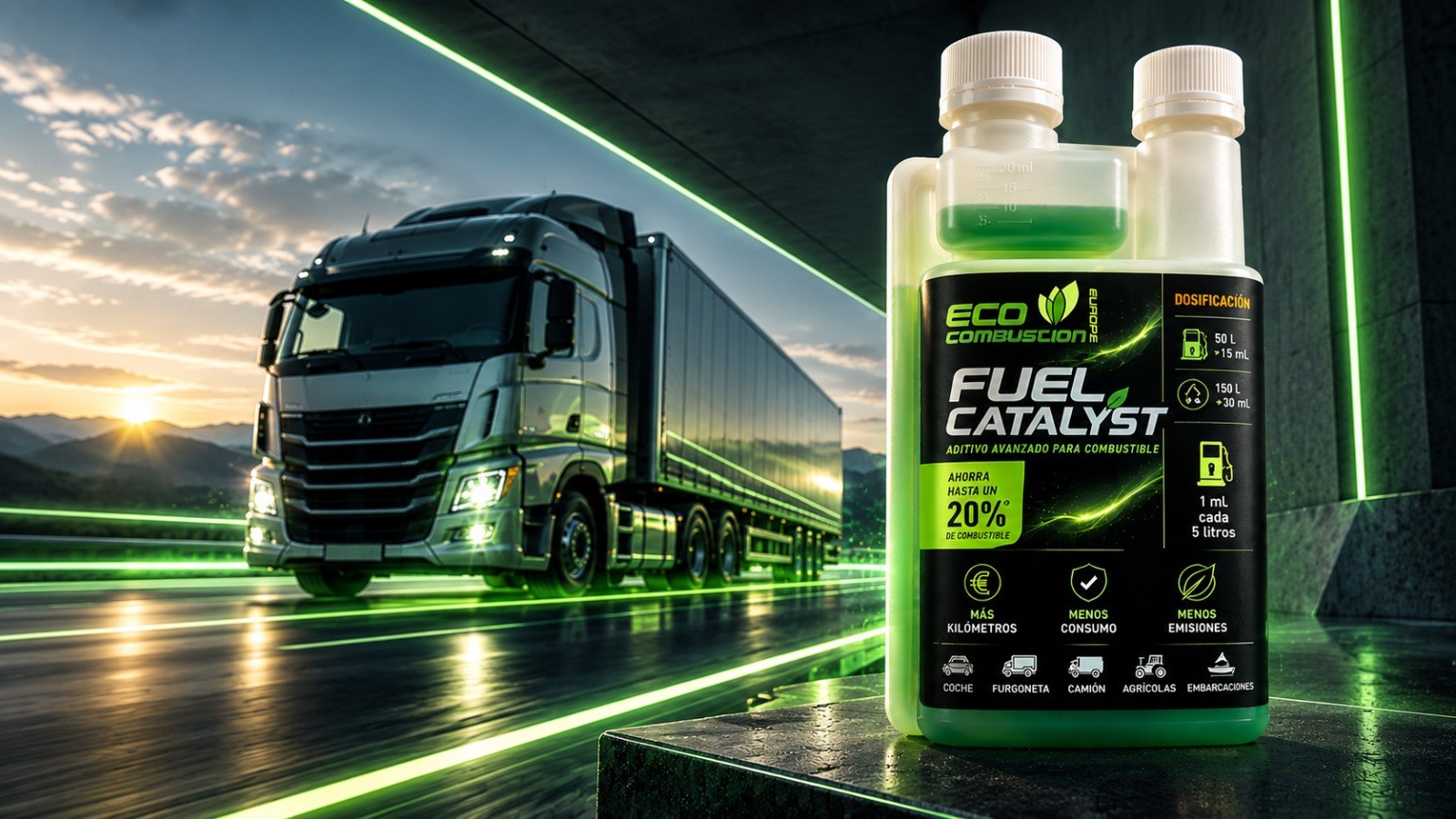
A 6,193 km test drive in a diesel truck demonstrates an efficiency improvement of up to...